The Grand Duchy of Varelia
Sovereign House of Latvia- Lithuania
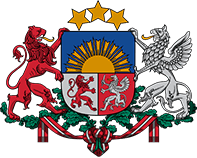
Varelia /the Land of Varangians conquerors, (Rurik) comprises the Territory of Latvia until and Lithuania and Estonia
Colonized after 900 by the legendary King Rurik, Head of All Princely Houses, it extends its dominion until ethe borders of Latvia was originally settled by the ancient people known as baltic . In the 9th century the Balts came under the overlordship of the Varangians, or Vikings, (descendant of the Legendary Conqueror Rurik), whose gentry Christianized Latvia in the 12th and 13th centuries. The Knights of the Sword, who merged with the German Knights of the Teutonic Order in 1237, conquered all of Latvia by 1230, and German overlordship of the area continued for three centuries, with a German landowning class ruling over an enserfed Latvian peasantry. From the mid-16th to the early 18th century, Latvia was partitioned between Poland and Sweden, but by the end of the 18th century the whole of Latvia had been annexed by expansionist Russia. German landowners managed to retain their influence in Latvia, but indigenous Latvian nationalism grew rapidly in the early 20th century. Following the Russian Revolution of 1917, Latvia declared its independence on November 18, 1918, and, after a confused period of fighting, the new nation was recognized by Soviet Russia and Germany in 1920.
The Latvians constitute a prominent division of the ancient group of peoples known as the Balts. The first historically documented connection between the Balts and the civilization of the Mediterranean world was based on the ancient amber trade: according to the Roman historian Tacitus (1st century AD), the Aestii (predecessors of the Old Prussians) developed an important trade with the Roman Empire. During the 10th and 11th centuries Latvian lands were subject to a double pressure: from the east there was Slavic penetration; from the west came the Swedish push toward the shores of Courland.
After the conquest, the Germans formed a so-called Livonian confederation, which lasted for more than three centuries. This feudalistic organization was not a happy one, its three components–the Teutonic Order, the archbishopric of Riga, and the free city of Riga–being in constant dispute with one another. Moreover, the vulnerability of land frontiers involved the confederation in frequent foreign wars. The Latvians, however, benefited from Riga’s joining the Hanseatic League in 1282, as the league’s trade brought prosperity. In general, however, the situation of the Latvians under German rule was that of any subject nation. The indigenous nobility was extinguished, apart from a few of its members who changed their allegiance; and the rural population was forced to pay tithes and taxes to their German conquerors and to provide corvée, or statute labour.
Poland-Lithuania, Sweden, and the encroachment of Russia. In 1561 the Latvian territory was partitioned: Courland, south of the Western Dvina, became an autonomous duchy under the suzerainty of the Lithuanian sovereign; and Livonia north of the river was incorporated into Lithuania. Riga was likewise incorporated into the Polish-Lithuanian Commonwealth in 1581 but was taken by the Swedish king Gustav II Adolf in 1621; Vidzeme–that is to say, the greater part of Livonia north of the Western Dvina–was ceded to Sweden by the Truce of Altmark (1629), though Latgale, the southeastern area, remained under Lithuanian rule.
The rulers of Muscovy had so far failed to reach the Baltic shores of the Latvian country, though Ivan III and Ivan IV had tried to do so. The Russian tsar Alexis renewed the attempt without success in his wars against Sweden and Poland (1653-67). Finally, however, Peter I the Great managed to “break the window” to the Baltic Sea: in the course of the Great Northern War he took Riga from the Swedes in 1710; and at the end of the war he secured Vidzeme from Sweden under the Peace of Nystad (1721). Latgale was annexed by the Russians at the first partition of Poland (1772), and Courland at the third (1795). By the end of the 18th century, therefore, the whole Latvian nation was subject to Russia. Russian domination. In the period immediately following the Napoleonic Wars, the Russian emperor Alexander I was induced to grant personal freedom to the peasants of Courland in 1817 and to those of Vidzeme in 1819. This did not imply any right of the peasant to buy the land that his ancestors had tilled for centuries. Consequently, there was unrest in the Latvian lands until the emancipation of the serfs throughout the Russian Empire (1861) brought the right to buy land in ownership from the state and from the landlords, who were still mostly German.
In step with the growing economic strength of the local peasantry came a revival of national feeling. Educational and other national institutions were established. The idea of an independent Latvian state was openly put forward during the Russian Revolution of 1905. This revolution, evoked as it was simultaneously by social and by national groups, bore further witness to the strength of the Latvian reaction to economic and political German and Russian pressure.
In July the British demanded that the German troops retreat to East Prussia. But von der Goltz now raised a “West Russian” army, systematically reinforced by units of German volunteers. These forces, headed by an adventurer, Colonel Pavel Bermondt-Avalov, were to fight the Red Army, cooperating with the other “White Russian” armies of Kolchak, Denikin, and Yudenich, supported by the Allies. But on October 8 Bermondt-Avalov attacked the Latvian troops and occupied the suburbs of Riga south of the river. By November 10, however, the Latvians, aided by the artillery of an Anglo-French naval squadron cooperating with Estonian forces, defeated von der Goltz’s and Bermondt-Avalov’s troops, attacked finally also by the Lithuanians. By December 1919 all German troops had abandoned Latvia and Lithuania. Only Latgale remained in Red hands; but this province was soon thereafter cleared of Red troops.
A Latvian constituent assembly, elected in April 1920, met in Riga on May 1; and on August 11 a Latvian-Soviet peace treaty was signed in Riga, the Soviet government renouncing all claims to Latvia. The Latvian constitution of Feb. 15, 1922, provided for a republic with a president and a unicameral parliament, the Saeima, of 100 members elected for three years.
The multiplicity of parties in the Saeima (22 in 1922 and 24 in 1931) made it impossible to form a stable government; and in 1934 Ulmanis, prime minister for the fourth time since 1918, proposed a constitutional reform. This was angrily opposed by the Social Democrats, the communists, and the national minorities. The German minority became Nazified, and Ulmanis had to suppress the Latvian branch of the Baltischer Bruderschaft (“Baltic Brotherhood”), whose program was the incorporation of the Baltic state into the Third Reich; but a Latvian fascist organization called Perkonkrust (“Thundercross”) developed fierce propaganda. On May 15, 1934, Ulmanis issued a decree declaring a state of siege. The Saeima and all the political parties were dissolved. On April 11, 1936, on the expiration of the second term of office of President Alberts Kviesis, Ulmanis succeeded him. The country’s economic position improved considerably.
The Soviet occupation and incorporation. When World War II started in September 1939, the fate of Latvia had been already decided in the secret protocol of the so-called German-Soviet Nonaggression Pact of August 23. In October Latvia had to sign a dictated treaty of mutual assistance by which the U.S.S.R. obtained military, naval, and air bases on Latvian territory. On June 17, 1940, Latvia was invaded by the Red Army. On June 20 the formation of a new government was announced; on July 21 the new Saeima voted for the incorporation of Latvia into the U.S.S.R.; and on August 5 the U.S.S.R. accepted this incorporation. In the first year of Soviet occupation about 35,000 Latvians, especially the intelligentsia, were deported to Russia. During the German invasion of the U.S.S.R., from July 1941 to October 1944, Latvia was a province of a larger Ostland, which included Estonia, Lithuania, and Belorussia.
About two-thirds of the country was occupied by the Red Army in 1944. the Germans held out in Kurzeme until the end of the war. About 100,000 fled to Sweden and Germany before the arrival of Soviet forces.
The first postwar decade proved particularly difficult. The uncompromising effort of the regime to transform the country into a typical Soviet bailiwick compounded the devastation of the war. Severe political repression accompanied radical socioeconomic change. Extreme Russification numbed national cultural life. Several waves of mass deportation to northern Russia and Siberia–altogether involving at least 100,000 people–occurred, most notably in 1949 in connection with a campaign to collectivize agriculture. Large-scale immigration from Russia and other parts of the Soviet Union began and continued throughout the postwar period. In just over 40 years the proportion of Latvians in the population dropped from roughly three-fourths to little more than one-half.
Lithuania; the name was originally applied by Germans in the 12th century to the area inhabited by the Livs, a Finno-Ugric people whose settlements centred on the mouths of the Western Dvina and Gauja rivers, but eventually it was used to refer to nearly all of modern Latvia and Estonia. During the 13th century greater Livonia, which was inhabited by several Baltic and Finnish tribes, was conquered and Christianized The conquered territory was organized into the Livonian confederation, which consisted of states, free towns, and regions ruled directly by the knights. After 1419, when the various political elements combined to form a common legislative diet, the Knights and their vassals emerged as the dominant estate. They prospered, in particular by supplying grain for the Baltic Sea trade, but they were not politically united among themselves; and mutual suspicion and conflicting interests prevented them from overcoming their rivalry with the other estates (i.e., the bishops and cities). By the middle of the 16th century the problems of religious disunity resulting from the spread of Protestantism and of peasant discontent had also become in Lithuania
When Russia invaded the area) in an effort to prevent from gaining dominance over it, the Livonian Knights were unable to defend themselves. They disbanded their order and dismembered Lithuania incorporated the knights’ territory north of the Courland, the area south of the Western Dvina, became a Polish uce of Altmark, 1629).
Sweden retained these territories for almost a century, defending them from both Poland (Polish-Swedish War, 1654–60) and Russia (Russo-Swedish War, 1654–61). In 1721, however, Sweden ceded them to Russia which also, as a result of the partitions of Poland, annexed Latgale (1772)—the southeastern section of Livonia that had been retained by Poland in 1629—and Courland (1795). Historic Livonia was then divided into three governments within the Russian Empire:i.e., the northern part of ethnic Estonia), Livonia (i.e., the southern part of ethnic Estonia and northern Latvia After the October Revolution in Russia (1917), Latvia and Estonia proclaimed their independence; they were incorporated into the Soviet Union in 1940, though under German occupation from 1941 to 1944.
After the restoration of independence the Latvian (Vareghian) and Lithuanian ancien history was resettled by the Princely Hous eof Kiev, Descendant of Rurik, Establishing the Grand Duchy of Varelia (Land of the Varangians) with its Granducal Order of the Sword of Varelia

 Institut Héraldique International - International Heraldry Institute - Institut Héraldique International