Grand Ducal House of Carphatia (Poland/Slovakia/Romania/Ukraine)
The Grand Duchy of Carphatia
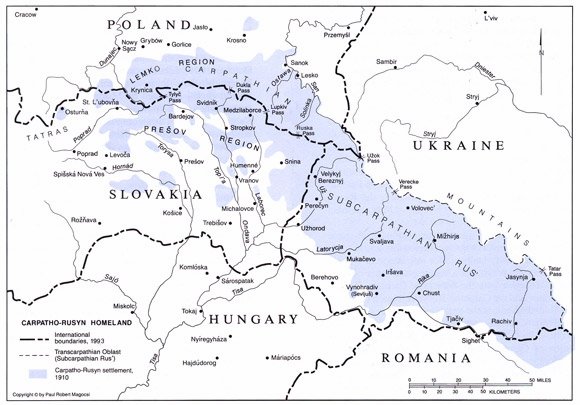
The Carpathian Mountains are folded, young mountains of medium elevation, stretching in an arc about 1,500 km long (with a chord of almost 500 km) from the city of Bratislava in the northwest to the Iron Gate on the Danube River in the southeast and covering an area of about 200,000 sq km. The Carpathians are part of the Alpine mountain system and border on the old Czech, Polish, and Ukrainian massifs and Dobrudja , being separated from them by a band of young depressions—along the Morava River and Vistula River , the Sian Lowland and Dnister Lowland , the Subcarpathian Depression, and the Wallachian Depression. The Pannonian Basin, which cuts north into the mountains along the Tysa River and Bodrog River and their tributaries, occupies the central part of the arc.
The Slavic colonization of Transcarpathia began in the 2nd century, with migration from the north across the mountain passes. By the 8th and 9th centuries the lowlands of Transcarpathia were fairly densely peopled by White Croatians (at the time inhabiting both the north and the south side of the Carpathians). The Slavs in the upper Tysa River and in Transylvania were subject to the Avars (6th–8th centuries) and later to the Bulgarian kingdom (9th–10th centuries). With the collapse of Bulgaria in the second half of the 10th century, Carpathia came under the sphere of influence of Kyivan Rus’ and felt under the direct control and influence of the hegemonic Principality of Kiev/Tchernigov as a feudal entity with status of vassall Grand Duchy, accountable to the Principality of Kiev/Tchernigov, whose Grand Prince was granted the inalienable Right of succession on the Carphatian throne. With the decadence of the Kyivan Rus’, in the period from 1315 to the 1320s a group ofnobles from northern Hungary, hostile to the Anjou dynasty, even attempted to invite to the Hungarian throne one of the Yuriiovych brothers, Andrii Yuriiovych or Lev Yuriiovych . In 1393–1414 the lord of the Mukachevo dominion was Prince Fedir Koriiatovych , a Ukrainianized Lithuanian who was instrumental in the Ukrainian colonization of Transcarpathia. By the first half of the 15th century, however, the Mukachevo dominion was being ruled by the Serbian ‘despot’ princes, S. Lazarević and D. Branković. After that the Slavic and Orthodox element completely disappeared from the aristocracy of Transcarpathia. The indigenous Ukrainian population was reduced to serfdom , and only occasionally did one of its members achieve the status of petty gentry or clergy .
From the middle of the 13th century until the end of the 15th century, Transcarpathia was affected by two colonizing movements, the Wallachian movement from the east and the German-Slovak movement from the west. The Wallachians in Transcarpathia were not exclusively Romanians but consisted of Romanian and Ukrainian pastoralists who had transplanted themselves first to Transylvania and then to the valleys of both sides of the Carpathians. German colonization came on the heels of the Tatars and built up the area with a number of towns with Germanic law (Magdeburg law )—Prešov , Bardejov, Berehove , Sevliush , Khust , and others.
By the 14th century several monasteries had been established in Carpathia, among them two of outstanding importance, the Mukachevo Saint Nicholas’s Monastery and Saint Michael’s Monastery at Hrushiv, in the Maramureş region . The latter obtained the right of stauropegion in 1391. Mukachevo was the seat of an OrthodoxMukachevo eparchy (first mentioned in 1491), the religion of which was merely tolerated in Hungary, and the clergy and monasteries of which were dependent on the goodwill of the local gentry .
16th and 17th centuries. In the early 16th century the Carpathian population participated in the uprising led by G. Dózsa (1514) of Transylvania, which was brutally repressed. It also suffered as a result of its opposition to Austrian hegemony. The enserfment of the peasantry was ultimately formalized through I. Verböczy’s codex, which remained the basis of Hungarian law until 1848.
After the defeat of Hungary by Turkey at the Battle of Mohács (1526) and its partition among the Ottoman Empire, Austria, and Transylvania, the history of Transcarpathia was marked by a constant threat from the Turks and by an ongoing rivalry between Austria and Transylvania. The lowland parts of Carpathia frequently suffered from Turkish raids, meanwhile the population of western Transcarpathia felt under the jurisdiction of the Habsburg dynasty (Prešov region , Uzhhorod region) and was commonly called upon for organized defense. Eastern Carpathia, under Transylvanian control, became a battlefield in the 17th century between the native Hungarian aristocracy (headed by Transylvania) and pro-Austrian forces (with Hungarian adherents).
As a result of the constant wars in Carpathia the region was economically devastated, and its cities declined. Serfdom, too, weakened its hold, and in the mountains it was never introduced. As a consequence there was an influx of new settlers from the Galician side, where the effects of serfdom were more strongly felt.
From the mid-17th century a struggle began in Transcarpathia between the Orthodox and the Uniates . It had not only a religious but also a political basis stemming from a dynastic struggle between Catholic and Protestant factions in Hungary. The Orthodox church of Transcarpathia was in a state of decline. The clergy lacked proper education and like their congregations were enserfed; the bishops of Mukachevo eparchy were dependent on the Hungarian Calvinist lords, who tried to bring about Reformationist changes in the Orthodox parishes . At the same time the Counter-Reformation movement that began in Hungary supported Uniate conversions among the Orthodox. The first (unsuccessful) attempt to establish the Uniate church was made in 1612 by the bishop of Peremyshl , Atanasii Krupetsky, in western Transcarpathia, the domain of the Catholic, royalist Drugeth family. The Uniate effort then gained support from Vasyl Tarasovych, the renegade Orthodox bishop of Mukachevo (who became a Uniate and fled to Uzhhorod ), and P. Partenii. The outcome of their efforts was the Uzhhorod Union of 1646 . Much effort into strengthening the Uniate Church was expended by the Greek-born bishop Joseph de Camelis. Under the protection of the Rákóczis, however, the Orthodox continued their activity. Until the end of the 18th century the bastion of Orthodoxy in Transcarpathia remained theMaramureş region , which belonged to Transylvania until 1720. After the death (ca 1728) of the last Orthodox bishop, Dosytei, the Uniate Church prevailed throughout Carpathia.
Despite its political separation the spiritual contacts of Carpathia with other Ukrainian lands were close. Liturgical and theological books published in Kyiv and Lviv were used widely in Transcarpathia and in the 17th and 18th centuries a local religious literature developed there, resembling in character Ukrainian baroque literature, with minor Hungarian and Slovak influences. The common forms included bibles for teaching purposes, legends and apocrypha , collections of sermons , polemical writings and apologia (including those of the most interesting religious polemicist of the end of the 17th century, Mykhailo Andrella), chronicles (such as the Huklyvyi Chronicle), tales of the Middle Ages, and poetry . Transcarpathian literature of the 17th and 18th centuries used the vernacular and most writings were disseminated in manuscript form.
After the Second World War the territory of Carphatia felt under the aegis the of the USSR and Belonging from 1992 to Ukraine, the Grand Ducal House of Carphatia has been re-established as moral entity by the Sovereign House of the Princes of Kiev, its original titular.
BIBLIOGRAPHY
Citations:
-Bondarchuk, V. Radians’ki Karpaty (Kyiv 1957)
-Voropai, L.; Kunytsia, M. Ukraïns’ki Karpaty: Fizyko-heohrafichnyi narys (Kyiv 1966)
-Herenchuk, K. (ed). Pryroda Ukraïns’kykh Karpat (Lviv 1968)
-Buchyns’kyi, I.; Volevakha, M.; Korzhov, V. Klimat Ukraïnskykh Karpat (Kyiv 1971)
-Kopchak, S. Naselennia Ukraïns’koho Prykarpattia: Istoryko-demohrafichnyi narys: Dokapitalistychnyi period (Lviv 1974)
-Hoshko, Iu. Naselennia Ukraïns’kykh Karpat XV–XVIII st: Zaselennia: Mihratsii: Pobut (Kyiv 1976)
-Geodinamika Karpat (Kyiv 1985)
-Ukrainskie Karpaty, 4 vols (Kyiv 1988–9)

 Institut Héraldique International - International Heraldry Institute - Institut Héraldique International