Covenant Statutes IHI
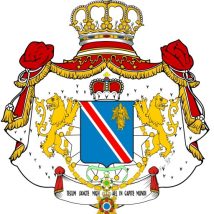
INTERNATIONAL COVENANT
ESTABLISHING THE INTERNATIONAL HERALDRY INSTITUTE (IHI)
The High Contracting Parties to the present International Covenant,
Aware of the necessity of promoting Heraldry as subsidiary discipline to to history, with a view of preserving the historical, genealogical, cultural and moral heritage of these ancient studies, as well as their actual importance for the transmission of moral, ethical and historical values to the new generations;
Convinced of the need to reunite heraldic and judicial expert for the permanent analysis of the legal and juridical capacities of heraldic conferral, renovation, recognition and restoration, into the framework of the academic community;
Recognizing the institutional and historical value of ancient Sovereign Houses, which have consistently contributed to the foundation of the relevant juridical systems on their respective States;
Sure of the need to gather ancient Sovereign Houses as well as individual heraldic bearers into a widespread international humanitarian movement, in favour of disadvantaged people social communities, both domestic and overseas, as a sign of distinction of true and genuine nobility;
Recalling that the prestige and dignity embodied by ancient Sovereign Houses and individual Heraldic bearers may represent a great inspiration and incentive for the future generations, towards the realization of an effective on-going enhanced social cohesion and mutual support;
Resolved in establishing an international Institute deemed to gather, study and classify the most significant heraldic heritage over the centuries, as indicative measurement of on-going civilization as well as engaged in a true ethical ennobling commitment for humanitarian action, with special accent on poverty eradication, sustainable development and social resilience;
have agreed as follows,
Article I) Definitions
For the Purposes of the Present Covenant, the following definitions shall apply:
a) The term “Member State” means a State which has directly expressed its consent to be bound by the present Covenant; or indirectly, by accession of an intergovernmental organization, of which that State is a Member.
b) The term “International Entity” defines:
-
an International Organization
-
a former Sovereign House
-
any other Entity endowed with International Subjectivity, duly asserted by irrevocable judicial proceeding,
c) The term “Reigning House” defines a Sovereign House which exercises a sovereign Territorial authority, and whose Head is the Head of a State, so exercising in fullest the prerogatives of Jus imperii ( the Right to govern), Jus gladii,( the right to command), Jus honorum ( the right to confer honours) and Jus Majestatis (the right to be treated with sovereign honours).
For the purpose of the present Covenant an adherent Reigning House represents its respective State.
d) The term “Sovereign House” defines a Dynasty (former Reigning House), which exercised a sovereign territorial or administrative authority and who had not deliberately renounced to its sovereign prerogatives (debellatio) but instead, which keeps unaltered its prerogatives of Jus Honorum and Jus Majuestatis, thus not exercising the Jus Imperii and the Jus Gladii.
e) The term “Head of a Sovereign House” defines its Principal legitimate Head of Name and Arms.
f) the term Individual Heraldic Bearer defines a singular having obtained Nobility by birth (native nobility) or by Warrant of concession / renovation/ confirmation or recognition (dative nobility)
Article II) Constitution of an Intergovernmental Organization
It is hereby constituted by this present Covenant an Intergovernmental organization named: International Heraldry Institute (IHI), hereinafter referred to as: “the Institute”, enjoying juridical personality of international law and related prerogatives, endowments, privileges and immunities, as the capacity to establish formal institutional relations with Member or third States and International Organizations, as well as with other Subject of International Law, the capacity to conclude Treaties and the capacity to emit its own organizational documents (laissez-passer and/or diplomatic passports, as well as to dispose of its own crests, emblems and flags. The international Subjectivity of the Institute, authorized by its establishment through multilateral Covenant (Treaty) shall make it exclusively subject to international Law.
Article III) Goals of the International Haraldry Institute (IHI)
Goals of the Institute shall be:
a) to work for the cultural preservation of Heraldry as academic discipline, subsidiary to history, as to facilitate the spreading of this cultural and academic subject political at international level;
b) to study and classify in cooperation with the Academia, the most significant heraldic heritage over the centuries, as indicative measurement of human social and moral civilization;
c) to provide institutional contacts and co-operation between States, international organizations, Sovereign Houses and other international entities, as well as their reciprocal knowledge, in international fora and thematic Conferences;
e) to coordinate a number of co-operated actions, amongst States, Sovereign Houses, international organizations and entities, with the support of NGOs and the Private Sector, as well as of Individual Heraldic Bearers, in order to attain humanitarian goals in favour of the unserved poor, as well as for the promotion of sustainable development, social cohesion, public health and the amelioration of the environment;
d) to publicly recognize distinguished benefactors and personalities operating in international cooperation and development field, in order to encourage public and institutional awareness in promoting charitable commitment and dedication as the true essence of nobility;
Article IV) Structure of the Institute
The International Institute of Heraldry shall be formed by:
1) The General Council;
2) The General Secretariat;
3) Subsidiary bodies, as Committees, Programs and Commissions.
Article V) General Council
The General Council shall be formed by the Representatives of the Parties and shall possess, in its entirety, the paramount legal responsibility on the Institute and on its actions and duties. It shall be annually convoked by the General Secretariat and shall elect for every session, its presiding Chairman and two Vice-Chairmen. The General Council which is always deemed to be quorated,
regardless the number of the participants, deliberates on the points on the Agenda at simple majority of the votes.
The Secretary-General will attend the General Council ex officio, without the right to vote and will discharge the secretarial duties in favour of the General Council.
The General Council is responsible for all operational and juridical acts of the Organization, which implies that all decisions of the General Council shall be free, sovereign, autonomous and final
Should the General Council fail to be formed or to function, the General Secretariat shall be automatically authorized to carry on the Institute’s activity without interruption, as extraordinary administration
Article VI) Tasks of the General Council
In the fulfilment of its purposes the General Council shall:
1) support the institutional goals and objectives;
2) deliberate on the issues on the agenda;
3) set up internal rules and procedures;
4) establish subsidiary organs, departments, bodies and commissions of the Institute;
5) resolve on any other issue, when required.
Article VII) The General Secretariat
The General Secretariat is the executive Body of the Institute, charged to perform the official activity of the organization, and is headed by a Secretary-General and composed of a number of officers, advisers, experts, envoys, representatives and staff members.
The General Secretariat shall be charged to:
1) select and organize the dates, venues and ways of summoning of the General Council;
2) keeping the minute of the verbatim of the General Council and custody of the archives of the Institute
3) establish and maintain continuous diplomatic relations between the Institute and its Members as well as Third Parties;
4) appoint and accredit delegates and representatives of the Institute;
6) coordinate the institutional humanitarian and cooperative actions.
Article VIII) Secretary-General
The Secretary-General is the highest officer of the Organization and coordinates and supervises all officers and activities of the General Secretariat. The Secretary-General is appointed with permanent term, unless renunciation. In case of renunciation the Secretary General may appoint another successor. The Title of Secretary-General of the Organization may be combined with other public and private offices. In particular the Secretary-General of the Organization shall enjoy:
1) the immunity from jurisdiction and execution, for any official and private act, both in Member States as well as in States belonging to Member intergovernmental organizations,:
2) the capacity, to sign or endorse any whatsoever act pertaining to the Institute, including the appointment of any staff, officer, adviser, expert and consultant of the Institute and/or their dismissal from service if found incompatible with the full attainment of the Institute’s goals.
3) the right to institute legal proceedings on behalf of the Institute;
4) the right to select and establish seats, offices, missions and delegations of the Institute;
5) the capacity to appoint the members of the Diplomatic Corps of the Institute, in various ranks, according to Vienna Convention on Diplomatic Relations (1961/
1963) as well as to nominate the Representatives of the Institute and to accredit to the Institute the Representatives of its counterparts.
6) the signature on every Institute’s fund and the capability to delegate any officer to affix a signature on public or private documents on his behalf
7) the capacity to appoint Committees and Commissions, and to establish Programs and Initiatives of the Institute
8) when abroad or when executing his offices in Countries adherent to the present Covenant, the Secretary-General enjoys the same level of immunities and privileges accorded to Ambassadors by the Vienna Convention on Diplomatic Relations (1961-1963)
Article IX) Institutional Members
The Institutional Members States, Intergovernmental Organizations and other Entities Subject of International Law, are listed in three categories:
1) Voting Members, which have acceded to this Covenant by instrument of Accession;
2) Affiliated Members, (observers), whose Membership is granted by the Secretary-General of the Organization for particular merit;
3) Associated Members (observers), also called Members by Right.
States, Intergovernmental Organizations and other Entities Subject of International Law, possess the right to participate to the Organization. This Membership right is notified in writing, by the Secretary-General of the Organization to States, Intergovernmental Organizations and International Entities, who will decide, according to their rules, whether to avail or not of such right. In case of silent consensus the right is given as acquired after a period of three months from the date of the official notification and the new Member is duly registered in the List of Associated Members (or Members by Right) of the Organization, disposing the prerogative to attend as observer the General Council in observer capacity. Associated Members may become Official Members by acceding to this present Covenant, upon written invitation from the depositary. All Members of the Organization are obliged to observe the rules of International Law and to cooperate for the attainment of the organization’s objectives.
Article X) Individual Members and Incentive Programs
Eminent individuals may become individual Members to the International Institute of Heraldry.
The selection of Individual members will meet specific criteria of merit in favour of the philanthropic and humanitarian activities of the Institute and of its Affiliated Sovereign Houses.
For fund-raising purposes and organizational sustainability, as well as in compliance with the provision of Article III) point d) Individual benefactors are entitled to receive aristocratic Distinctions and Recognitions, as a sign of reward for their charitable commitment to the Institute’ s humanitarian works.
Article XI) Non profit and charitable character of the Institute
The Institute is self-funded through voluntary public and private contributions and grants, managed in an Endowment Fund which shall be employed for non-profit and charitable activities, as humanitarian, programs organization of Conferences and Seminars and any other benevolent activity, directly performed by the Institute and/or through its affiliated Sovereign Houses and/or operational cooperative partners
Article XII) Prerogatives
For adherent States and for those already member to acceding intergovernmental organizations, the accession to this present Covenant constitutes an obligation, comparable to that provided in an headquarters agreements and directly confers to the Institute the legal recognition of its juridical personality, the immunity from jurisdiction and execution, the capacity to contract and the capacity of instituting legal proceedings. This also implies the immunity from violation of seats, inspections, requisitions and searches, the inviolability on the correspondence and on any communication, the exoneration from taxation on any grant and donation bestowed to the Institute.
The Secretary General may renounce, by written assertion, to any specific immunity, on a case-by-case basis.
Article XIII) Attainment of new emerging peremptory norms
This Covenant, of unlimited duration, cannot be amended or altered. Should any provision of this Covenant conflicting with a new emerging peremptory norm of general International Law, such specific provision will be considered void, not affecting the validity of the whole Covenant.
Article XIV) Entry into force
The present Covenant is open, upon formal invitation by the depositary, to States, Inter-governmental organizations with treaty-making capacity and other Entities Subject of International Law International. The present Covenant enters into force at the date of the deposit of the third Signature and/or Instrument of Accession with the depositary and shall be open for subsequent adhesions through deposit of the Instrument of Accession with the depositary.
Depositary of this Covenant shall be the Secretary-General of the Institute, in charge of the relevant functions.
Done the day 13 November 2015 in a single copy in English and French and Spanish languages, all texts being equal and equally authentic.
IN WITHNESS WHEREOF, THE PLENIPOTENTIARIES OF THE PARTIES, HAVE SIGNED THE PRESENT COVENANT

 Institut Héraldique International - International Heraldry Institute - Institut Héraldique International